ESP in Life and Lab by Louisa E. Rhine
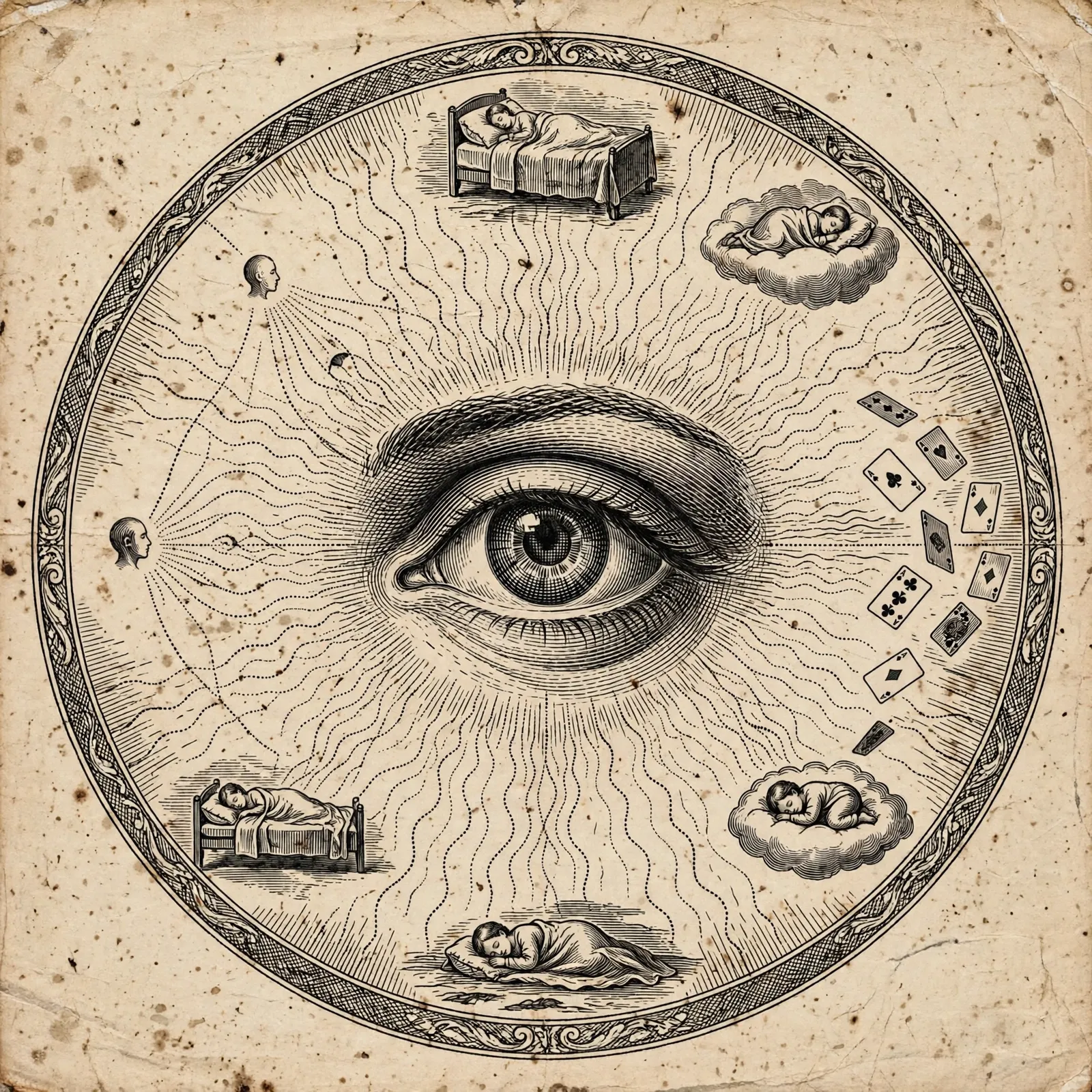
My Review
Reading this book was like watching paint dry. I just happen to enjoy the color of its paint.
Mostly an account of other peoples experiences with ESP this work creates a framework for seeing a vast array of individuals from the mid-twenty first century in America explain their everyday experiences with precognitive dreams, psychokinetics, telepathy, and the myriad of unclassified psi-occurences within our everyday spheres.
Dr. Louisa E. Rhine continues the thread between these first-hand accounts by laying the cognitive soil where we can find a common expression amidst the many voices that called out and who wrote letters to the Duke Parapsychology Laboratory during the 1930's, 40's and 50's.
The main dimension she asserts is that "...information secured by ESP is processed or conveyed to conscious attention by the psychological constructs; intuitions, dreams, and hallucinations." pg. 161
She found since we spend the majority of our lives awake, that the primary duct, which carts this capacity is intuitive, then we have a lesser but still significant amount through dreams, and a marginal amount experienced as hallucinations (not counting affects that lead to them i.e. drugs, lack of eating, no sleep etc.), and that these hallucinations occurred in auditory, olfactory, and perceptive ways.
Another aspect of PSI that was wiped clear for me her no frills definition distinguishing telepathy from clairvoyance: "To make a telepathy test there should be no object, only the thought of one; to make a clairvoyance test, no thought but only an object." pg. 78
She focuses the majority of her creative energy on where these experiences come from and finds it less significant (at least within the preliminary realm of determining ESP affects upon individuals psychologically, emotionally and physically), to elucidate upon what type of ESP is occurring.
"Perhaps it will not be out of order here to emphasize that the form of an ESP experience is quite distinct from its type. In type it may be clairvoyant, telepathic or precognitive, but each of these types may occur in any of the four forms, as an intuition, realistic or unrealistic dream, or as a hallucination."
"It is the form, not the type of E.S.P., which gives the hints of the kind of process this is, by which the information makes its way to consciousness, for the type shows only the kind of target, thought, thing or future event, but the form shows the psychological manner in which the information got to consciousness." pg. 178
Dr. Louisa E. Rhine channels out the voices of many Americans who have been curious about our capacities since we've begun to realize (or remember) we have them. Her tone between these voices is patient, clever, and pioneering. Near the end of the book she reveals her awareness of the fact that the quasi-scientific field in which she operates is still a long way aways from being understood as the seminal moment in human consciousness that it is.
"The phenomena are still exceptional, even anomalous today, but not aberrant because now their lawful nature is obvious. And so a truly major adjustment of fact and theory is called for. New viewpoints are necessary, and they do not depend on discoveries in the objective world alone, but even more on changes that can come about only in the slow swing of habitual patterns of thought." pg. 266


articles straight to your inbox. unsubscribe anytime.
Joseph Voelbel designs learning curriculum and writes about money, systems, and meaning. Author of Pay Attention to Bitcoin (2024), a crash-course primer on sound money, Nineteen Stories (2017), an exploration of the unknown, and This Plant Will Grow (2026), a children's book about a plant that becomes a rainforest.