Cradle to Cradle by William McDonough
My Review
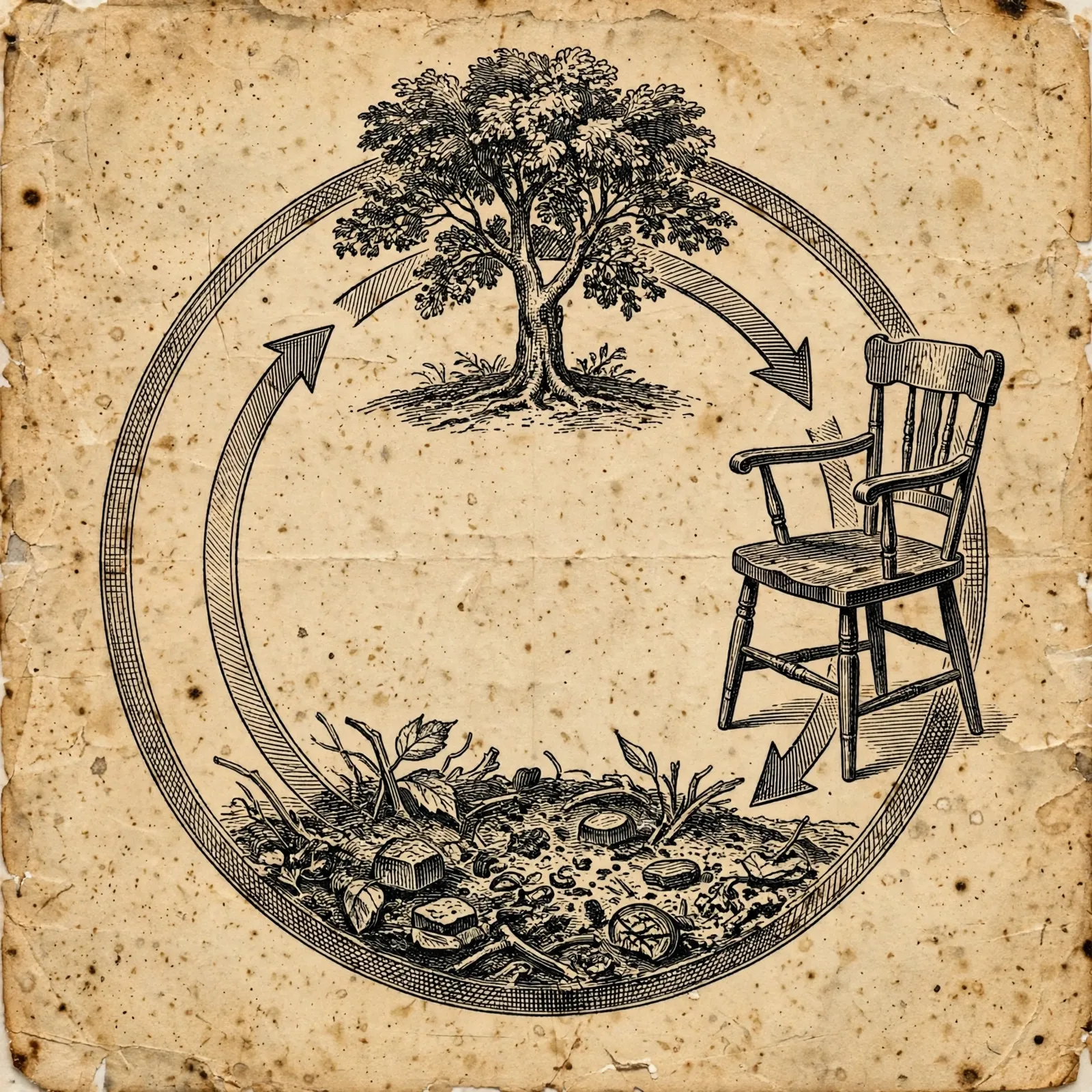
This book constitutes an entirely new vision of how to conceive of design so that it encompasses the afterlife or "upcycling" of a product. Braungart divides industry into two categories, technical nutrients and biological nutrients. Technical nutrients are materials that can be returned to the technical cycle, and safely reused. Biological nutrients are materials that can be returned to the biological cycle, and naturally broken down.
So much of our industrial design is under the premise of "cradle to grave" inventions, that is, items that are made to fulfill their purpose for a period of time and then they become burdens of waste, i.e. we have to pay to have it dumped, burned, or "put out" in any other conceivable way. The problem with this is that our landfills are full of a large amount of technical and biological nutrients, that when mixed together, aren't valuable on either end of the scale. This book holds a vision for a modern world that "upcycles" such that "waste equals food" on all accounts.
Beyond this primary issue this text also, by citing personal examples, seeks to showcase new business environments, workplaces, and methods for achieving financial goals that begin with the questions of biological prudence and end with a stronger life span for the companies themselves. This is included but not limited to, making "buildings" more like organisms that respond, adapt with, and contribute to the ecological make-up of its surroundings. The idea of making a building like a tree that nourishes the soil, provides habitat for local species, and integrates the fauna of its surroundings seems largely unconventional, but Braungart found that after having designed a company that way, with large naturally lit indoor spaces, grass roofs that cool in the summer and retain heat in the winter, are not only economically sound investments, but statements for the true symbiosis of industry with ecology. The largely positive upswing of such an approach is that "industrial buildings" need no longer be equated with "cultural eye sores." On top of this the guilt which usually accompanies working for or purchasing from a company that doesn't heed the ecological red flags of today are replaced with a genuine sense of purpose both within one's natural environment/local community and throughout the materially globalized world.
As well as being a theoretical weigh-station for the innovative design of tomorrow, Cradle to Cradle is also a prototype, "This book is not a tree. It is printed on synthetic "paper" and bound into a book format developed by innovative book packager Charles Melcher of Melcher Media. Unlike the paper with which we are familiar, it does not use any wood pulp or cotton fiber but is made from plastic resins and inorganic fillers. This material is not only waterproof, extremely durable, and (in many localities) recyclable by conventional means; it is also a prototype for the book as a "technical nutrient," that is, as a product that can be broken down and circulated infinitely in industrial cycles - made and remade as "paper" or other products." (pg.5 - Chapter 1 - This Book is not a Tree).
Although a hefty price, I wholehearted recommend this informative piece of literature that reads more like a manifesto than a lab report. Anyone interested in furthering their wisdom on the chemical products around us and in our daily lives that effect our health and ultimately will effect the health of many generations to come, and want to see the 'telescoping of tomorrow' for how we can cope with this as a species should take this opportunity to buy this book, read it, and tell a friend about it, especially if their friend has connections in Architecture, Design, Industry, and Business or Economics.
A fun read! Not dry at all. Plus you can read in the bathtub!
articles straight to your inbox. unsubscribe anytime.
Joseph Voelbel designs learning curriculum and writes about money, systems, and meaning. Author of Pay Attention to Bitcoin (2024), a crash-course primer on sound money, Nineteen Stories (2017), an exploration of the unknown, and This Plant Will Grow (2026), a children's book about a plant that becomes a rainforest.